Happy 2019 to all. Sorry for the lack of posts here, but not much new to report, fortunately.
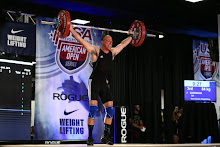
I continue to lift and hit PR's, and in fact competed in 3 weightlifting meets in 2018! I'm starting to believe that olympic lifting (snatches, cleanes, pulls) is actually strengthening my lower and mid back musculature to a point that it adds stability to my lower back. That being said, I try to focus heavily on form, form, form before loading, as well as extra core work. I still mostly avoid irritating movements (situps) but sometimes do T2B, and when I do burpees, I don't usually combine them with heavy lifts due to the possibility of fatigue leading to breakdown in midline stabilization.
Very thankful that I can continue training and hope that I can continue to do so for a long time. Sorry for the delay in updates and replies, but I hope that those of you out there dealing with spondy are thriving and improving as well! Keep searching for answers and keep searching for experts - there are good PT's, coaches and docs out there who can help with this condition.
Cheers.
Monday, January 7, 2019
Happy 2019!


 An aging and somewhat injured athlete trying to hold on to fitness, health, fun, and not a little bit of glory
Wednesday, March 21, 2018
Fantastic article on the new science of treating lower back pain
Wanted to post this amazing article about back pain and treatment and the new thinking on it.
https://www.vox.com/science-and-health/2017/8/4/15929484/chronic-back-pain-treatment-mainstream-vs-alternative
Clearly, the traiditional standbys of rest, surgery, injections and drugs aren't working for many back pain sufferers, but exercise, core strength and PT are.
It's a great read and great validation of the importance of staying active, staying strong and not just blindly following passive treatments. Certainly there are situations where surgery and injections can help and are needed (and in my case a decompression surgery was absolutely needed) but they shouldn't be the only treatment for anyone with lower back issues.
And, of course, what back pain article would be complete without a mention of Dr. Stu McGill, the spinal biomechanics expert, and his "Big 3" exercises? He is truly a well of knowledge for those of us with back issues and his research and exercises are back savers.
Anyway, enjoy the read and good luck with your spondy journey!
https://www.vox.com/science-and-health/2017/8/4/15929484/chronic-back-pain-treatment-mainstream-vs-alternative
Clearly, the traiditional standbys of rest, surgery, injections and drugs aren't working for many back pain sufferers, but exercise, core strength and PT are.
It's a great read and great validation of the importance of staying active, staying strong and not just blindly following passive treatments. Certainly there are situations where surgery and injections can help and are needed (and in my case a decompression surgery was absolutely needed) but they shouldn't be the only treatment for anyone with lower back issues.
And, of course, what back pain article would be complete without a mention of Dr. Stu McGill, the spinal biomechanics expert, and his "Big 3" exercises? He is truly a well of knowledge for those of us with back issues and his research and exercises are back savers.
Anyway, enjoy the read and good luck with your spondy journey!
An aging and somewhat injured athlete trying to hold on to fitness, health, fun, and not a little bit of glory
Monday, December 18, 2017
2017 Updates
Here's a quick update for any followers still out there or folks still dealing with a spondy.
I'm still humming along, doing olympic lifting 3 days a week, including heavy snatches, cleans, jerks and pulls, doing CrossFit 1-2x a week and playing sports. No new leg pain or low back issues. I do get some occasional mid and upper back tweaks from olympic lifting but those all seem to be soft tissue and don't last fortunately.
I competed in two weightlifting meets in 2017 and plan to compete in at least 2 next year as well. Just recently I PR'ed both my snatch and clean and jerk, and PR'ed my squats this past year as well! I don't attempt heavy deadlifts, but to be honest, I feel like heavy pulls and lifts have actually made my back feel better and stronger. I now have spinal erectors that I can actually see and feel, and though I thought it was pretty good then, my core strength is way beyond what it was a few years ago. I feel very blessed and hope that I can maintain this.
Anyway, hope everyone is getting the help and treatment they need and taking care of themselves and seeing good progress. Hit me up with any comments or questions.
Happy Holidays and Happy New Year Spondy athletes!!
I'm still humming along, doing olympic lifting 3 days a week, including heavy snatches, cleans, jerks and pulls, doing CrossFit 1-2x a week and playing sports. No new leg pain or low back issues. I do get some occasional mid and upper back tweaks from olympic lifting but those all seem to be soft tissue and don't last fortunately.
I competed in two weightlifting meets in 2017 and plan to compete in at least 2 next year as well. Just recently I PR'ed both my snatch and clean and jerk, and PR'ed my squats this past year as well! I don't attempt heavy deadlifts, but to be honest, I feel like heavy pulls and lifts have actually made my back feel better and stronger. I now have spinal erectors that I can actually see and feel, and though I thought it was pretty good then, my core strength is way beyond what it was a few years ago. I feel very blessed and hope that I can maintain this.
Anyway, hope everyone is getting the help and treatment they need and taking care of themselves and seeing good progress. Hit me up with any comments or questions.
Happy Holidays and Happy New Year Spondy athletes!!
#crossfit #weightlifting #spondylolisthesis
An aging and somewhat injured athlete trying to hold on to fitness, health, fun, and not a little bit of glory
Tuesday, June 14, 2016
Interesting article on Spondy surgery outcomes
Hey folks, just saw this study posted in the NE Journal of Medicine, and thought it might be of interest to those considering surgical options for spondylolisthesis:
In a nutshell, adding fusion on top of lumbar decompression/laminectomy may have no added benefit for those with just radiculopathy (leg nerve) symptoms.
Something to consider if you're being told you need a fusion.
As for me, I continue to do CrossFit and (olympic) lift 3 days a week. In fact, I did my first olympic weightlifting meet, hitting a PR in my clean and jerk (99 kg / 218 lbs)!
I also continue to hit the core work hard:
- front squats
- weighted planks
- dead bugs
- bird dogs
- reverse hypers and GHD hip extensions (being careful to AVOID hyperextension)
Hope everyone is healing or figuring out ways to continue to train while avoiding pain.
Cheers.
In a nutshell, adding fusion on top of lumbar decompression/laminectomy may have no added benefit for those with just radiculopathy (leg nerve) symptoms.
Something to consider if you're being told you need a fusion.
As for me, I continue to do CrossFit and (olympic) lift 3 days a week. In fact, I did my first olympic weightlifting meet, hitting a PR in my clean and jerk (99 kg / 218 lbs)!
I also continue to hit the core work hard:
- front squats
- weighted planks
- dead bugs
- bird dogs
- reverse hypers and GHD hip extensions (being careful to AVOID hyperextension)
Hope everyone is healing or figuring out ways to continue to train while avoiding pain.
Cheers.
#crossfit #weightlifting #spondylolisthesis
An aging and somewhat injured athlete trying to hold on to fitness, health, fun, and not a little bit of glory
Thursday, December 10, 2015
Late fall Update
Howdy spondy athletes. I see that my blog posts have attracted some attention in Google searches, so I guess there must be a good number of you going through this situation, unfortunately. I am sorry if that is the case, and I hope that my blog provides some useful knowledge for those in a similar situation trying to decide what to do, especially you athletes out there who want to stay fit and active despite a spondy. I try to use the knowledge I've gained along the way to guide others and help them avoid a spondy if they don't have one, but if they do, how to manage it and when to consider next steps.
As an update for me, I continue to work out and live pain free. I am still following my previously described guidance, deadlifting rarely, watching my loads during CrossFit, and only going heavy in low rep situations. That being said, I have hit a couple of new PR's on the olympic lifts, so I am pretty stoked about that, and it hasn't seemed to introduce any new symptoms. Again, I am very careful to maintain good form and lock in my midline before and during every lift. I use a lifting belt for most lifts (this one, since it has a section that goes over L5-S1). I also played my sport all summer without any issues and continue to walk, run and dance pain-free. Hoping it will last!
Anyway, as always, feel free to post questions or comments to the blog!
Be well!
As an update for me, I continue to work out and live pain free. I am still following my previously described guidance, deadlifting rarely, watching my loads during CrossFit, and only going heavy in low rep situations. That being said, I have hit a couple of new PR's on the olympic lifts, so I am pretty stoked about that, and it hasn't seemed to introduce any new symptoms. Again, I am very careful to maintain good form and lock in my midline before and during every lift. I use a lifting belt for most lifts (this one, since it has a section that goes over L5-S1). I also played my sport all summer without any issues and continue to walk, run and dance pain-free. Hoping it will last!
Anyway, as always, feel free to post questions or comments to the blog!
Be well!
#crossfit #weightlifting #spondylolisthesis
An aging and somewhat injured athlete trying to hold on to fitness, health, fun, and not a little bit of glory
Monday, June 8, 2015
Updates
Hi all. Thought I'd post up a short update on how I am getting along these days with my training and my lumbar issues.
Overall, things continue to go well. The leg pain, burning and numbness that I endured for a year and a half has not returned, fortunately, and though I do have occasional nerve twinges in the hip (that don't extend past my left glute), I'm not 100% sure that those are actually from my L5 nerve root vs. the L4 nerve root (where I have a small disc bulge as well). Overall, those are fairly minor and do not impact walking, running, dancing, training, etc.
I am still being careful with CrossFit loading and volume, and I am not Rx'ing every WOD, to be sure. I have continued to focus on really good technique and form, and only go heavy in low-volume strength work. I rarely deadlift right now, and I don't think I'm suffering for it. Since it tends to induce higher lumbar shear stresses, I'm OK avoiding it for the most part since I am retaining posterior chain strength via squatting, kettlebell swings, weighted glute bridges and also via some olympic lifts - cleans, snatches. My clean and jerk is about 25# below my all-time PR, and I don't see any big reason to push it, and recently I snatched 155#, about 10# below my all-time PR. I'm good with those numbers for the moment, and most importantly, they haven't caused me new pain.
I still hammer my core with planks, weighted planks, suitcase (kettlebell) carries, Chinese bridges, glute bridges, bird-dogs, etc. and I think it really helps to maintain the lumbar stability, especially post laminectomy. I continue to avoid sit-ups and most flexion-based movements except for on rare occasions when I feel like doing a few toes-to-bar, and I am being especially careful w/WOD combos that combine burpees and flexion with high rep lifts per this recent interview with Dr. Stu McGill.
I continue to do decompression (hanging from the pull up rig, arm supports from tabletops, etc.) a few times a day, and that does help especially after sitting at work a lot or driving. When I work from home I use a standing desk and alternate between sitting and standing. I also continue with mobility work on glutes, hams, hip flexors, etc. though not as much as before.
Interestingly, I've had a few PT's and docs tell me over the last few months that I was wise not to go for a fusion at this stage. No sense in starting the clock on further disc degeneration and with leg pain as the primary symptom, fusion didn't make sense at this point. Hopefully it stays that way.
Anyway, I hope this blog is proving useful to those going through a similar journey. I'll post an update over the summer.
Be well, fellow aging lumbar athletes!
Overall, things continue to go well. The leg pain, burning and numbness that I endured for a year and a half has not returned, fortunately, and though I do have occasional nerve twinges in the hip (that don't extend past my left glute), I'm not 100% sure that those are actually from my L5 nerve root vs. the L4 nerve root (where I have a small disc bulge as well). Overall, those are fairly minor and do not impact walking, running, dancing, training, etc.
I am still being careful with CrossFit loading and volume, and I am not Rx'ing every WOD, to be sure. I have continued to focus on really good technique and form, and only go heavy in low-volume strength work. I rarely deadlift right now, and I don't think I'm suffering for it. Since it tends to induce higher lumbar shear stresses, I'm OK avoiding it for the most part since I am retaining posterior chain strength via squatting, kettlebell swings, weighted glute bridges and also via some olympic lifts - cleans, snatches. My clean and jerk is about 25# below my all-time PR, and I don't see any big reason to push it, and recently I snatched 155#, about 10# below my all-time PR. I'm good with those numbers for the moment, and most importantly, they haven't caused me new pain.
I still hammer my core with planks, weighted planks, suitcase (kettlebell) carries, Chinese bridges, glute bridges, bird-dogs, etc. and I think it really helps to maintain the lumbar stability, especially post laminectomy. I continue to avoid sit-ups and most flexion-based movements except for on rare occasions when I feel like doing a few toes-to-bar, and I am being especially careful w/WOD combos that combine burpees and flexion with high rep lifts per this recent interview with Dr. Stu McGill.
I continue to do decompression (hanging from the pull up rig, arm supports from tabletops, etc.) a few times a day, and that does help especially after sitting at work a lot or driving. When I work from home I use a standing desk and alternate between sitting and standing. I also continue with mobility work on glutes, hams, hip flexors, etc. though not as much as before.
Interestingly, I've had a few PT's and docs tell me over the last few months that I was wise not to go for a fusion at this stage. No sense in starting the clock on further disc degeneration and with leg pain as the primary symptom, fusion didn't make sense at this point. Hopefully it stays that way.
Anyway, I hope this blog is proving useful to those going through a similar journey. I'll post an update over the summer.
Be well, fellow aging lumbar athletes!
#crossfit #weightlifting #spondylolisthesis
An aging and somewhat injured athlete trying to hold on to fitness, health, fun, and not a little bit of glory
Thursday, March 26, 2015
Neurosurgery & Beyond
In June of 2014, I happened to be having my annual physical, and as I was discussing my spondy trials and tribulations with my internist, he suggested I go see one of the top neurosurgeons in the area. I told him that I had already seen two top spine surgeons, but he suggested I go anyway since a) I had nothing to lose, and b) he might have a different perspective on my condition.
I sought out the neurosurgeon, and after redoing my x-rays and MRI (it had been about a year since my prior images), I went to see him in September. Within 10 minutes of reviewing my images and examining me, he suggested a different strategy. He said that, for my case, since my spondy was low grade and stable, and since I was very fit, that he would recommend a simple decompression procedure that would involve a hemi-laminectomy, foraminotomy, and removal of the broken facet joint fragment that was pressing on the nerve (Gill procedure). Recovery would be quick and much less involved than fusion surgery, and he said that I was not in need of a fusion at this point given my overall health and level of slip. And while he couldn't guarantee that I wouldn't need a fusion at some point in the future, he agreed that it didn't make sense to "start the clock" on the adjacent disk degeneration at this stage either.
This revelation was like jumping into a cold, refreshing swimming pool on a 100 degree day. Wait a sec...I wouldn't need to fuse my spine and lose mobility, face a long recovery with no bending, lifting or twisting for 6-8 weeks, and I would be able to go back to my activities (within reason - more on that later)? Seriously? My wife (who is also a doc and accompanied me on the visit) and I looked at each other in disbelief. Was it even a question?
Within a few days I went ahead and scheduled myself for the decompression procedure at the end of October. My surgeon said I would be in the hospital overnight and could go home the next day, and would be OK to go back to work after a 10 days - 2 weeks. This sounded good to me.
On the morning of my surgery, I was scheduled as first case (yay), and arrived at the hospital before 5am, was prepped and ready to go by 6am. At 7:45am I was wheeled into the OR, given a spinal block and some sedative, and was back in recovery before 9am. After regaining feeling in my legs (yikes that sensation was weird) by the middle of the day, I was feeling pretty good and recovering in my room. The pain in my incision was fairly significant, and the muscles were tight and in spasm, but I didn't end up taking much of the pain pump since I hate pain meds and they drop my blood pressure (that's a whole other story that I won't go into).
I was able to get up and walk around the room a bit that afternoon, and I noticed that the reduction in my leg pain was significant. It wasn't completely gone, but it was already greatly reduced. My surgeon told me that my nerve was very severely compressed, and that I should expect gradual improvement over months as the nerve takes time to heal completely after being under such compression. After a fitful night's sleep, and some lousy hospital food, I was home by lunchtime the next day. Though I took a prescription for pain meds, I ended up only taking Advil after leaving the hospital.
Per the discharge instructions, I began walking around the house over the first couple of days, and iced my back several times a day. By the end of the first week, I was walking up to a 1/2 mile around the neighborhood, and within a couple of weeks, I was walking up to a mile. The reduction in my pain and numbness, even in those first couple of weeks, was remarkable. It was like getting a new leash on life.
During that first month, the nerve continued to improve, with occasional twinges or soreness, as the back gradually loosened up. But what a difference from pre-surgery!
During my post-op checkup, my doc declared that he was impressed by my recovery and told me that I could gradually begin more movement and exercise, but to still be careful as I wouldn't be considered "healed" until at least 3 months out. He also told me, at this point, that I should avoid weight lifting going forward. Well, if you're reading this blog, chances are you know what my response was. Right. So, while I didn't get into a lengthy discussion on the merits of lifting and CrossFit, the nuances of proper lifting technique, and Mark Rippetoe's opinions on the matter, I did ask him to give me some guidance on what would be considered "lower risk" lifting. Of course, he said deadlifts should be avoided and that I should keep weights under 50 lbs. OK, well, sure. With that, I said I would modify and be careful and keep the weights down, but press forward.
Feeling good, by the beginning of the 2nd month following the procedure, I began to work on my core strength again, doing abdominal bracing, planks, side planks, glute bridges, birddogs, etc. and rebuilt my core (which fortunately hadn't really declined much even through the surgery), and I kept walking (which is great, by the way, regardless of your fitness level or other chosen fitness activities). My incision began to feel less painful each day and the leg pain continued to disappear.
By the third month, I returned to my CrossFit box and began some basic modified WOD's with movements that would keep my spine stiff and not involve repetitive bending movements (air squats, pushups, pullups, step ups, lunges, etc.). I also avoided jarring movements like box jumps, double unders, running so as not to irritate the healing nerve and spine. My fitness began to return as my leg felt good.
Over the last two months, I have gradually reintroduced many CrossFit movements into my repertoire, at gradually increasing weights, such as squats, cleans, jerks, deadlifts, etc. Though I am not going near as heavy as I did before the injury and surgery, I am definitely working hard on strength, at least in low-rep sets, and continuing to push the metcons. During metcons, I go lighter and I substitute for certain movements that are likely to irritate the nerve or put me in significant extension. For example:
- for high rep snatches or clean and jerks, I might sub KB swings
- for high rep deadlifts I might sub rowing on damper of 10
- for GHD's, situps or Toes-to-bar, I'll sub knee raises or weighted plank holds
So far so good. Through the increased activity, I do have some sore days where my lower back gets tight and the muscles spaz a bit, but fortunately I have not had any leg pain or numbness return. I was wavering on participating in the 2015 CrossFit Games Open, but in the end decided to give it a go, and it has mostly gone pretty well for me, without any major setbacks in terms of pain or dysfunction.
I am keeping my fingers crossed that I can sustain this current state and that the slip does not progress nor compromise the nerve root again. I continue to focus relentlessly on:
- technique ("chase technique and the weights will come!")
- scaling appropriately and checking my ego
- core strength and stability
- mobility work
- spinal deloading and decompression
I have been using what I have learned on my journey to help others in my CrossFit box and I am happy to answer questions as well.
That's it for now. Hope this has been useful. I will post periodic updates as time goes by. Good luck to those of you going through a similar journey. Just remember - there are always ways to move forward and improve. Never stop looking for answers!!!
I sought out the neurosurgeon, and after redoing my x-rays and MRI (it had been about a year since my prior images), I went to see him in September. Within 10 minutes of reviewing my images and examining me, he suggested a different strategy. He said that, for my case, since my spondy was low grade and stable, and since I was very fit, that he would recommend a simple decompression procedure that would involve a hemi-laminectomy, foraminotomy, and removal of the broken facet joint fragment that was pressing on the nerve (Gill procedure). Recovery would be quick and much less involved than fusion surgery, and he said that I was not in need of a fusion at this point given my overall health and level of slip. And while he couldn't guarantee that I wouldn't need a fusion at some point in the future, he agreed that it didn't make sense to "start the clock" on the adjacent disk degeneration at this stage either.
This revelation was like jumping into a cold, refreshing swimming pool on a 100 degree day. Wait a sec...I wouldn't need to fuse my spine and lose mobility, face a long recovery with no bending, lifting or twisting for 6-8 weeks, and I would be able to go back to my activities (within reason - more on that later)? Seriously? My wife (who is also a doc and accompanied me on the visit) and I looked at each other in disbelief. Was it even a question?
Within a few days I went ahead and scheduled myself for the decompression procedure at the end of October. My surgeon said I would be in the hospital overnight and could go home the next day, and would be OK to go back to work after a 10 days - 2 weeks. This sounded good to me.
On the morning of my surgery, I was scheduled as first case (yay), and arrived at the hospital before 5am, was prepped and ready to go by 6am. At 7:45am I was wheeled into the OR, given a spinal block and some sedative, and was back in recovery before 9am. After regaining feeling in my legs (yikes that sensation was weird) by the middle of the day, I was feeling pretty good and recovering in my room. The pain in my incision was fairly significant, and the muscles were tight and in spasm, but I didn't end up taking much of the pain pump since I hate pain meds and they drop my blood pressure (that's a whole other story that I won't go into).
I was able to get up and walk around the room a bit that afternoon, and I noticed that the reduction in my leg pain was significant. It wasn't completely gone, but it was already greatly reduced. My surgeon told me that my nerve was very severely compressed, and that I should expect gradual improvement over months as the nerve takes time to heal completely after being under such compression. After a fitful night's sleep, and some lousy hospital food, I was home by lunchtime the next day. Though I took a prescription for pain meds, I ended up only taking Advil after leaving the hospital.
Per the discharge instructions, I began walking around the house over the first couple of days, and iced my back several times a day. By the end of the first week, I was walking up to a 1/2 mile around the neighborhood, and within a couple of weeks, I was walking up to a mile. The reduction in my pain and numbness, even in those first couple of weeks, was remarkable. It was like getting a new leash on life.
During that first month, the nerve continued to improve, with occasional twinges or soreness, as the back gradually loosened up. But what a difference from pre-surgery!
During my post-op checkup, my doc declared that he was impressed by my recovery and told me that I could gradually begin more movement and exercise, but to still be careful as I wouldn't be considered "healed" until at least 3 months out. He also told me, at this point, that I should avoid weight lifting going forward. Well, if you're reading this blog, chances are you know what my response was. Right. So, while I didn't get into a lengthy discussion on the merits of lifting and CrossFit, the nuances of proper lifting technique, and Mark Rippetoe's opinions on the matter, I did ask him to give me some guidance on what would be considered "lower risk" lifting. Of course, he said deadlifts should be avoided and that I should keep weights under 50 lbs. OK, well, sure. With that, I said I would modify and be careful and keep the weights down, but press forward.
Feeling good, by the beginning of the 2nd month following the procedure, I began to work on my core strength again, doing abdominal bracing, planks, side planks, glute bridges, birddogs, etc. and rebuilt my core (which fortunately hadn't really declined much even through the surgery), and I kept walking (which is great, by the way, regardless of your fitness level or other chosen fitness activities). My incision began to feel less painful each day and the leg pain continued to disappear.
By the third month, I returned to my CrossFit box and began some basic modified WOD's with movements that would keep my spine stiff and not involve repetitive bending movements (air squats, pushups, pullups, step ups, lunges, etc.). I also avoided jarring movements like box jumps, double unders, running so as not to irritate the healing nerve and spine. My fitness began to return as my leg felt good.
Over the last two months, I have gradually reintroduced many CrossFit movements into my repertoire, at gradually increasing weights, such as squats, cleans, jerks, deadlifts, etc. Though I am not going near as heavy as I did before the injury and surgery, I am definitely working hard on strength, at least in low-rep sets, and continuing to push the metcons. During metcons, I go lighter and I substitute for certain movements that are likely to irritate the nerve or put me in significant extension. For example:
- for high rep snatches or clean and jerks, I might sub KB swings
- for high rep deadlifts I might sub rowing on damper of 10
- for GHD's, situps or Toes-to-bar, I'll sub knee raises or weighted plank holds
So far so good. Through the increased activity, I do have some sore days where my lower back gets tight and the muscles spaz a bit, but fortunately I have not had any leg pain or numbness return. I was wavering on participating in the 2015 CrossFit Games Open, but in the end decided to give it a go, and it has mostly gone pretty well for me, without any major setbacks in terms of pain or dysfunction.
I am keeping my fingers crossed that I can sustain this current state and that the slip does not progress nor compromise the nerve root again. I continue to focus relentlessly on:
- technique ("chase technique and the weights will come!")
- scaling appropriately and checking my ego
- core strength and stability
- mobility work
- spinal deloading and decompression
I have been using what I have learned on my journey to help others in my CrossFit box and I am happy to answer questions as well.
That's it for now. Hope this has been useful. I will post periodic updates as time goes by. Good luck to those of you going through a similar journey. Just remember - there are always ways to move forward and improve. Never stop looking for answers!!!
#crossfit #weightlifting #spondylolisthesis
An aging and somewhat injured athlete trying to hold on to fitness, health, fun, and not a little bit of glory
Subscribe to:
Posts (Atom)